

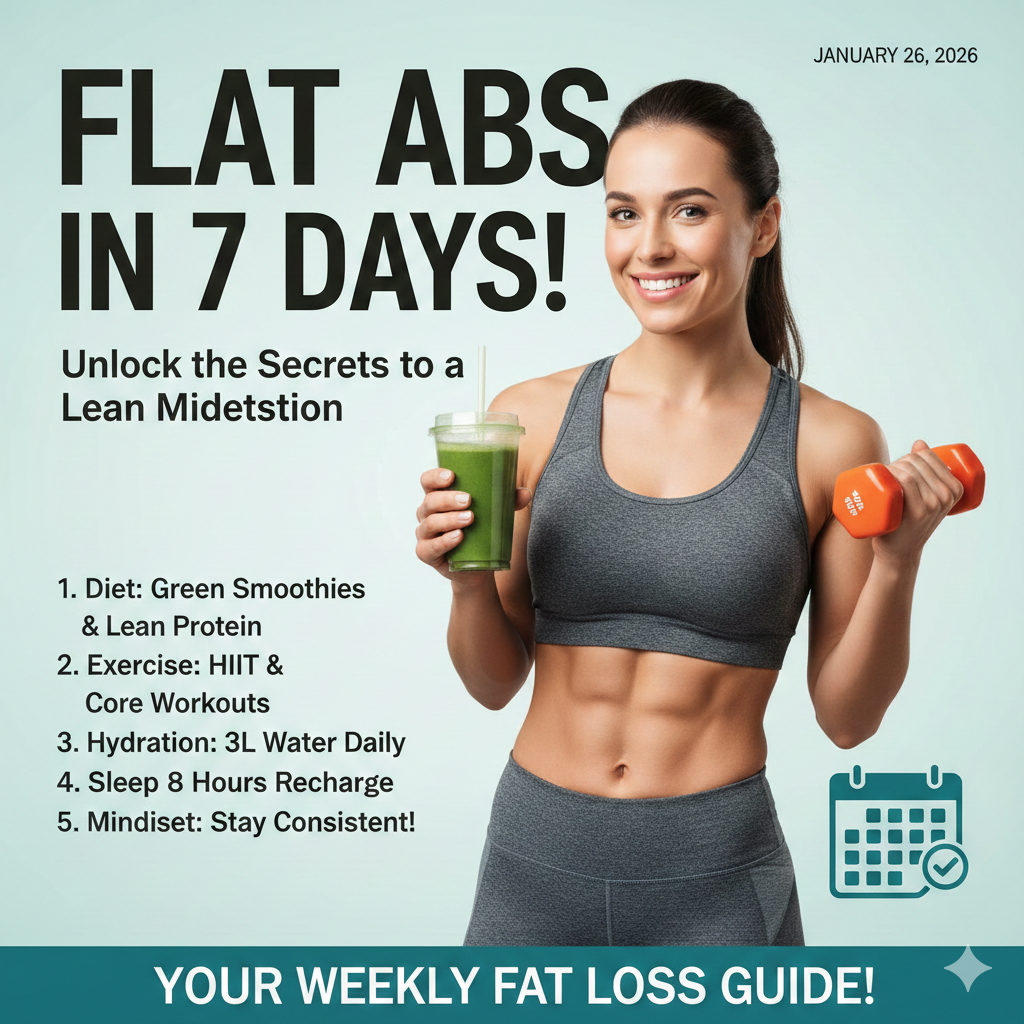
Losing belly fat is perhaps the most common fitness goal, but it’s also the one shrouded in the most myth. We’ve all seen the "miracle" 24-hour fixes, but if you want to see visible progress in just seven days, you need a strategy that combines metabolic science with disciplined habit changes.
While you cannot "spot reduce" fat from only one area of the body, you can certainly reduce overall inflammation and bloat while kickstarting the fat-burning process. Here is your comprehensive, step-by-step roadmap to leaning out your midsection in a single week.
The Science of the “Quick Start”
To lose weight in a week, you aren't just fighting fat; you are fighting water retention and glycogen storage. Your body stores carbohydrates as glycogen in your muscles and liver, and each gram of glycogen holds about three to four grams of water. By adjusting your intake, you can shed several pounds of "water weight" almost immediately, making your stomach look flatter and more defined.
1. Master Your Macros: The Low-Carb Advantage
If you have seven days to make a difference, cutting refined carbohydrates is your most powerful lever. Bread, pasta, sugary snacks, and sodas cause insulin spikes. Since insulin is your body's primary fat-storage hormone, keeping it low allows your body to access stored fat for fuel.
Focus on Protein: Increase your intake of lean proteins like chicken breast, fish, eggs, and tofu. Protein has a high thermic effect, meaning your body burns more calories just digesting it.
Load Up on Fiber: Non-starchy vegetables (broccoli, spinach, peppers) fill you up without adding significant calories.
2. High-Intensity Training vs. Steady Cardio
Walking is great, but if you're on a one-week deadline, you need to turn up the heat. High-Intensity Interval Training (HIIT) has been shown to be more effective for abdominal fat than traditional steady-state cardio.
A 20-minute session of alternating 30 seconds of sprinting with 60 seconds of walking creates an "afterburn" effect (EPOC), where your metabolism remains elevated for hours after the workout is over.
3. The Power of Specialized Tools
While diet and exercise form the foundation, many people struggle with the "last mile"—that stubborn visceral fat that seems resistant to traditional methods. This is where professional-grade support comes in.
The weight loss tools available through our link are designed to complement your efforts by optimizing your metabolic rate and suppressing cravings that usually derail a one-week plan. These aren't just generic supplements; they are formulated to help bridge the gap between hard work and visible results.
Interestingly, we have seen a massive surge in popularity for these specific products in the United States. Many users across the US have reported that integrating these tools into their weekly routine provided the extra "edge" they needed to see real definition in their abdominal area. The feedback has been overwhelmingly positive, with users noting that the products felt like a natural extension of their fitness journey rather than a shortcut.
4. Hydration and “The Salt Trap”
It sounds counterintuitive, but to lose water weight, you must drink more water. When you’re dehydrated, your body enters survival mode and holds onto every drop it has. Aim for at least 3 liters of water a day.
Crucially, slash your sodium intake. Salt acts like a sponge in your tissues. By avoiding processed meats, canned soups, and heavy seasonings for seven days, you will likely notice a significant reduction in midsection puffiness within the first 48 hours.
5. Prioritize Sleep and Stress Management
Cortisol is the "stress hormone," and it is a known culprit for belly fat accumulation. When you are stressed or sleep-deprived, your body holds onto fat in the abdominal region as a protective mechanism.
Sleep: Aim for 7–9 hours. Growth hormone, which aids fat loss, is released primarily during deep sleep.
Stress: Even five minutes of deep breathing can lower cortisol levels, making it easier for your body to let go of stubborn fat.
6. Intermittent Fasting (The 16/8 Method)
For a one-week sprint, Intermittent Fasting (IF) can be a game-changer. By restricting your eating window to 8 hours (e.g., 12:00 PM to 8:00 PM) and fasting for the remaining 16, you give your digestive system a break and force your body to burn fat stores for energy during the fasting hours.
Putting it All Together: Your 7-Day Schedule
Days 1-3: Eliminate all sugar and bread. Start your HIIT sessions. Begin using your specialized weight loss tools to manage hunger and boost energy levels as your body adjusts to fewer carbs.
Days 4-5: Focus on hydration. Increase your water intake and ensure you are getting enough sleep. You will likely notice your clothes fitting a bit looser by now.
Days 6-7: Maintain the discipline. This is where most people quit, but staying the course will yield the most visible "tightening" of the core.
Why This Approach Works
This isn't about a "fad diet." It’s about creating a temporary caloric deficit while optimizing your hormones. By combining clean eating and intense movement with the high-quality products found in our link, you are attacking the fat from every possible angle.
The success stories from our users in the United States prove that when you pair the right technology with a solid plan, the results speak for themselves. People are finding that these tools help maintain the energy levels needed to push through a rigorous week of leaning out.
Final Thoughts
Losing belly fat in a week requires a mental shift as much as a physical one. It’s about being "perfect" for 168 hours. While you won't lose 20 pounds of pure fat in seven days, you can absolutely transform your silhouette, lose inches of bloat, and set the stage for long-term health.
Ready to start your transformation? Check out the weight loss tools in our link today and join the thousands of successful users who have finally cracked the code to a flatter stomach.